Critical success factors in supply chains: analysis of the perception of managers of multinational companies in the post-pandemic scenario
Fatores críticos de sucesso em cadeias de suprimentos: análise da percepção de gestores de empresas multinacionais no cenário pós-pandêmico
Geórgia Cecatto de Almeida1, Orcid: https://orcid.org/0000-0003-3769-6315; Guilherme Bergmann Borges Vieira2, Orcid: https://orcid.org/0000-0001-6463-9987; Carlos Honorato Schuch Santos3, Orcid: https://orcid.org/0000-0001-6121-4174; Rafael Mozart da Silva4,
Orcid: https://orcid.org/0000-0003-0314-757X
1. Universidade de Caxias do Sul (UCS), Caxias do Sul - RS, Brasil. E-mail: gcalmeida1@ucs.br
2. Universidade de Caxias do Sul (UCS), Caxias do Sul-RS, Brasil. E-mail: gbbvieir@ucs.br
3. Universidade Federal do Rio Grande (FURG), Santo Antônio da Patrulha-RS, Brasil. E-mail: honoratochs@gmail.com
4. Universidade Federal do Rio Grande do Sul (UFRGS), Tramandaí-RS, Brasil. E-mail: rafael.mozart@ufrgs.br
Abstract
This research sought to analyze the perception of supply chain managers from multinational manufacturing industries about the critical success factors in supply chain management in the post-pandemic scenario. To this end, we sought to identify the main impacts caused by the rupture in the global supply chain as a result of the pandemic; the actions taken by supply chain professionals to reduce these impacts; the obtained results; and the critical success factors for facing the verified challenges. The study followed an exploratory qualitative approach, being operationalized through semi-structured interviews, which were recorded, transcribed and submitted to content analysis. The results indicated dual sourcing and the search for local or regional suppliers as the main actions taken by companies. As for the critical success factors for supply chain management in this context of turbulence caused by the pandemic, aspects related to the performance and qualification of human resources, the managerial maturity, structure and way of acting of the companies, and the supply chain itself, including the relationship with customers and suppliers, market orientation and the development of adequate logistical forecasts were highlighted.
Keywords: supply chain management. post-pandemic scenario. critical success factors. multinational companies. perception of managers.
Resumo
Esta pesquisa buscou analisar a percepção dos gestores de supply chain de indústrias manufatureiras multinacionais sobre os fatores críticos de sucesso na gestão da cadeia de suprimentos no cenário pós-pandemia. Para tanto, buscou-se identificar os principais impactos causados pela ruptura na cadeia global de suprimentos em decorrência da pandemia; as ações tomadas pelos profissionais de supply chain para reduzir esses impactos; os resultados obtidos; e os fatores críticos de sucesso para o enfrentamento dos desafios verificados. O estudo seguiu uma abordagem qualitativa exploratória, sendo operacionalizado mediante entrevistas semiestruturadas, as quais foram gravadas, transcritas e submetidas a análise de conteúdo. Os resultados indicaram o dual sourcing e a busca por fornecedores locais ou regionais como as principais ações adotadas pelas empresas. Quanto aos fatores críticos de sucesso para o gerenciamento da cadeia de suprimentos nesse contexto de turbulência causada pela pandemia, desatacaram-se aspectos relacionados à atuação e qualificação dos recursos humanos; à maturidade gerencial, estrutura e forma de atuação das empresas; e à cadeia de suprimentos propriamente dita, incluindo a relação com clientes e fornecedores, a orientação ao mercado e o desenvolvimento de previsões logísticas adequadas.
Palavras-chave: gerenciamento da cadeia de suprimentos. cenário pós-pandêmico. fatores críticos de sucesso. empresas multinacionais. percepção de gestores.
Citation: Almeida, G. C., Vieira, G. B. B., Santos, C. h. s., Silva, R. M. . (2025). Critical success factors in supply chains: analysis of the perception of managers of multinational companies in the post-pandemic scenario. Gestão & Regionalidade, v. 41, e20258946. https//doi.org/10.13037/gr.vol41.e20258946
1 Introduction
The beginning of the 21st century brings some changes in the global competitive scenario. The inevitable hybrid life, in which the virtual and the real complement each other, means that some already consolidated concepts, both in literature and in business, gain greater visibility. This is the case of supply chain management, which now needs to gain greater capacity to be flexible and adaptable to changes so that organizations remain competitive.
In order for this to happen, it is important that critical success factors in supply chains are re-evaluated. The literature already provides information about these factors, but given the structural changes in both the market and the architecture of supply chains, it is necessary to re-evaluate, corroborate, or realign these factors.
The Covid-19 pandemic, for example, was one of the factors that contributed to these changes, both in local and global markets, causing the disruption (total or partial) of supply chains. To face these disruptions, organizations had to act strategically, implementing actions to redirect their efforts and activities, as well as carrying out 'replanning' to redefine their objectives, re-evaluate their resources (both real and potential), redesign their supply chains, and identify new potential opportunities.
All this replanning work needs to be supported by a robust set of information. Therefore, it is valuable to discuss in depth the critical success factors (CSFs) in supply chain management, especially after the disruptions caused by the Covid-19 pandemic. With that being said, the present study aims to answer the following research problem: How have supply chain managers perceived the critical success factors for supply chain management in the post-pandemic scenario?
To answer this question, the general objective was to analyze the perceptions of managers in multinational manufacturing industries regarding the critical success factors in supply chain management in the post-pandemic scenario. To this end, it was sought to (i) identify the main impacts caused by the disruption in the global supply chain of manufacturing industries as a result of the Covid-19 pandemic; (ii) verify the actions taken by supply chain professionals to reduce these impacts; (iii) analyze the results obtained from these actions; (iv) identify the critical success factors for facing the challenges encountered in the post-pandemic scenario; and (v) establish a set of theoretical and practical propositions based on the results obtained.
The study is justified by the existence of few studies referring to the impacts caused by the pandemic in multinational manufacturing industries specifically aimed at professionals in the supply chain area. Among similar studies on the topic, the contributions by Pimenta et al. (2022) and Raj et al. (2022) can be mentioned, although they do not specifically focus on professionals in the sector. The study also gains relevance because it is a current issue, which can contribute in practical terms to organizations and the supply chain managers linked to them.
The article uses an exploratory qualitative approach. This type of approach is common in studies on topics in early to intermediate stages of development, as is the case in the present study (see Edmondson & McManus, 2007). Based on this contribution and new studies that may arise from it, it is possible to refine the research problem and create a more robust theoretical corpus, which can lead to quantitative approaches in future research.
2 Theoretical Background
This section presents the theoretical background on which the research was based. The section is structured to present the main concepts of supply chain management, the impacts of the Covid-19 pandemic on supply chains and the actions adopted by supply chain professionals to mitigate such impacts.
2.1 Supply Chain Management
The concept of supply chain management was first introduced in the early 1980s when Oliver and Webber (2012), two logistics consultants, proposed this term to describe a nascent field of science that was still under development (Masteika & Čepinskis, 2015). For Oliver and Webber (2012), supply chain management is the process of planning, implementing, and controlling operations within a chain with the aim of satisfying customer requirements in the most efficient manner possible. Supply chain management encompasses all movement and storage of raw materials, in-process inventory and finished products, from the point of origin to the point of consumption (Felea & Albǎstroiu, 2013).
Supply chain management encompasses different processes, such as channel development (Alderson, 1957); the “bullwhip effect” in production and distribution systems (Forrester, 1997); inventory location and control in production and distribution networks (Hanssmann, 1959); the analysis of collaboration and cooperation (Bowersox and Closs, 1996); and hierarchical production planning (Hax & Meal, 1976).
Felea and Albǎstroiu (2013) reported that the interest of theorists and the concern of professionals regarding supply chain management has increased steadily since the 1980s, when companies discovered that they could no longer compete in isolation from their suppliers or other supply chain entities and have seen the benefits of collaborative relationships within and outside their own organization.
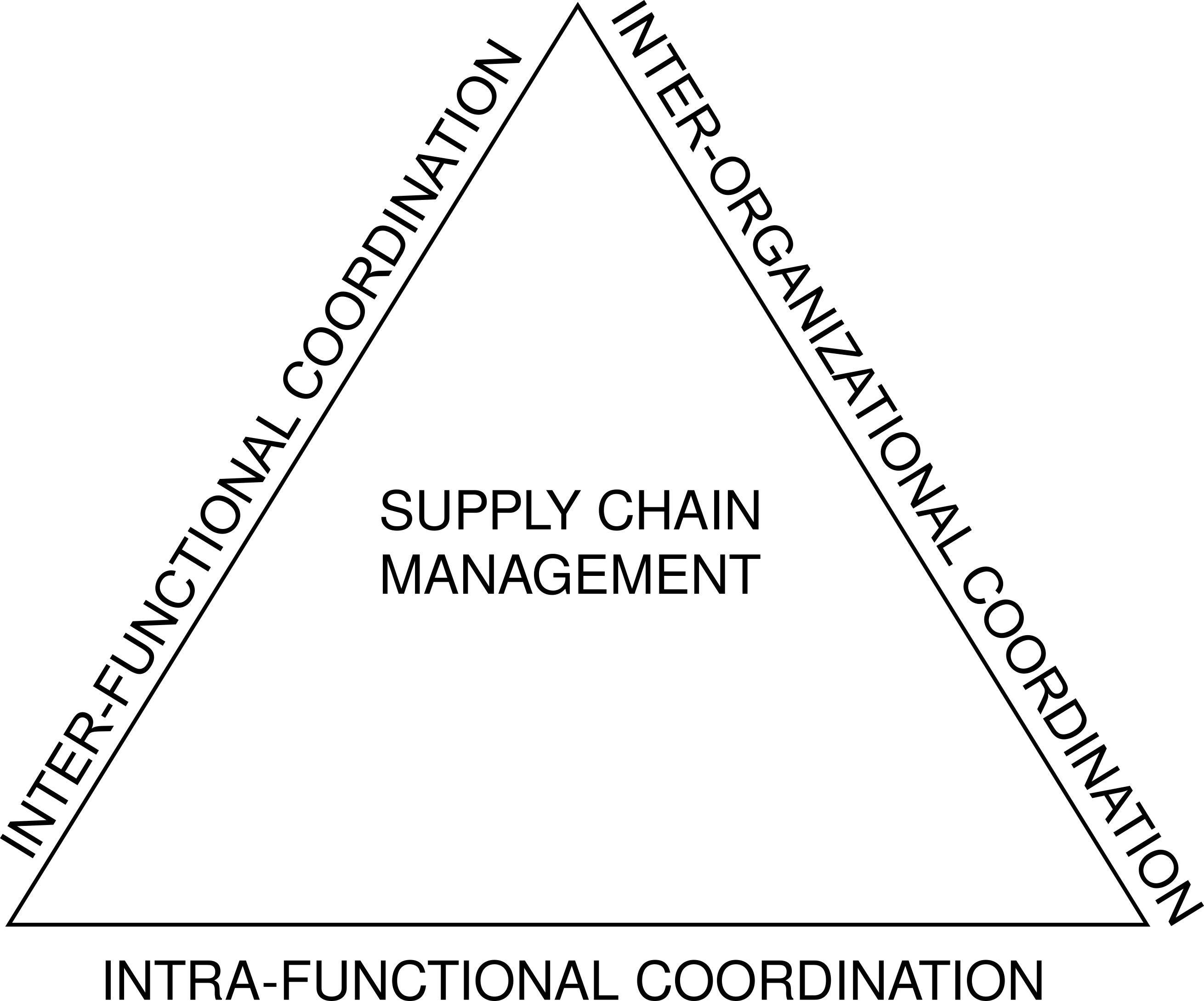
After the first SCM concepts were published, several researchers and professionals dedicated themselves to exploring this topic. For many authors, the foundations of supply chain management are associated with the historical development of logistics, and many consider supply chain management and logistics to be synonymous. For Ballou et al. (2000), in turn, there are three conceptual approaches to supply chain management: (i) intra-functional coordination; (ii) inter-functional coordination; and (iii) interorganizational coordination (Figure 1). Intra-functional coordination refers to managing internal logistics activities and processes within a company. Inter-functional coordination, in turn, concerns to the coordination between activities, which involves certain corporate functions and functional areas. And inter-organizational coordination refers to coordinating chains of activities between different companies based on their material and product flows.
Figure 1
The three dimensions of Supply Chain Management
Source: adapted from Ballou, Gilbert and Mukherjee (2000).
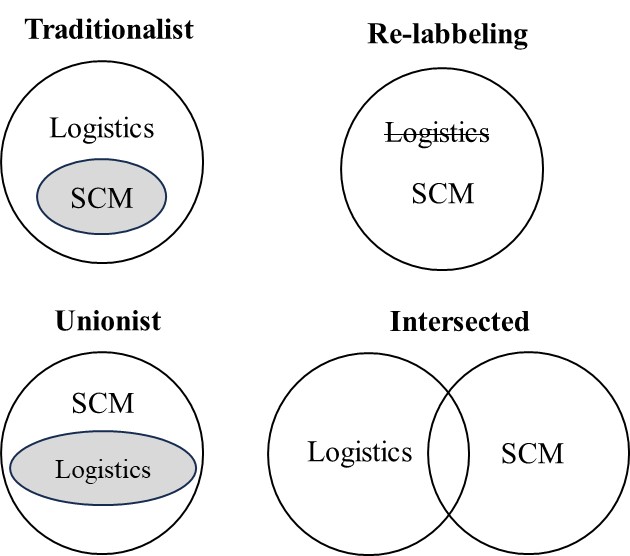
As shown in Figure 1, logistics could be considered a subarea of SCM. However, Larson and Halldorsson (2004) identified four distinct conceptual approaches in the discussion on the scope of SCM and logistics concepts: (i) traditional approach; (ii) re-labeling; (iii) unionist approach; and (iv) intersectional approach (Figure 2)..
Figure 2
Perspectives on Supply Chain Management (SCM) versus Logistics
Source: adapted from Larson and Halldorsson (2004).
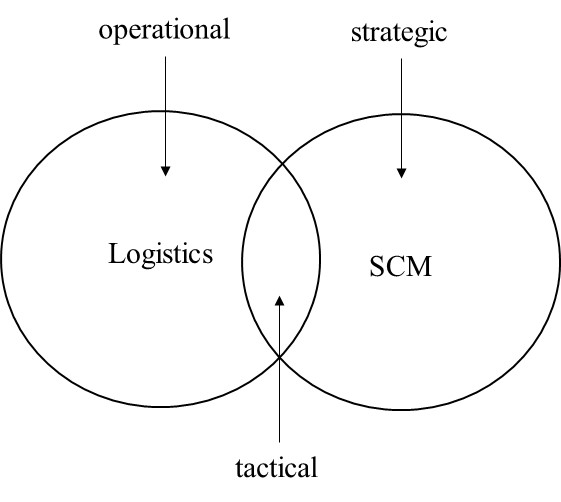
The traditionalist perspective views supply chain management (SCM) as a subset of logistics, reducing it to a specialized form of logistics that focuses on external or interorganizational processes. The re-labeling perspective simply renames logistics: what was logistics is now supply chain management. In the unionist view, logistics is considered a component of SCM, representing one of many processes or business areas. From the intersectional perspective, SCM is seen as a broad strategy that encompasses many, if not all, business areas, while logistics specifically focuses on operational decisions. From this perspective, SCM is related to strategic decisions and tactical decisions is regarded as an intersection with logistics, which is also responsible for operational decisions (Figure 3).
Figure 3
Logistics and Supply Chain Management
Source: prepared by the authors.
The intersectional perspective was used in this study as a reference. This perspective was the most appropriate both to represent all the possible areas of activity of interviewees (Section 3) and to discuss the mitigating actions taken by companies and the critical success factors indicated by managers.
2.2 Covid-19 and global supply chains
According to Kim and Bui (2019), interruptions in supply chains can arise from acute shocks or sudden onset events, such as storms, earthquakes, and man-made disasters. There are also long-term chronic stressors such as climate change, sea level rise, global warming, and inadequate repair and maintenance that can lead to breakdowns and service interruptions. After disasters, actions such as clearing debris, restoring critical infrastructure systems, reopening hospitals, fire stations, schools, and other facilities, repairing damaged homes and businesses, regenerating economic activities, and recovering natural assets are part of the “bounce back” or “return to normality” (Kim & Bui, 2019).
When disasters occur, they can have consequences on supply chains and therefore affect the routines of people and organizations, directly or indirectly. Delivery delays, increased transportation times and storage difficulties are just a few examples of problems that supply chain professionals may face during a disaster.
For example, earthquakes, landslides, or cyclones can lead to storage problems because, when they occur on a large scale, they have the potential to destroy warehouses and facilities, often resulting in a total loss of products (Kim & Bui, 2019). Wars can also affect production and storage sites. As a recent example, we can mention the war between Ukraine and Russia, which has generated a series of disruptions in global supply chains.
Epidemic category disasters can also affect supply chains because infectious and transmissible diseases can result in professionals being removed from their work activities. As an example, we can mention the pandemic caused by the Covid-19 virus, which caused places to close completely, forcing residents to stay indoors and stop working (or work remotely). Travel bans were instituted in large amounts, completely preventing the movement of people and goods (Yan et al., 2020).
According to the World Health Organization (2022), by June 2022, 529 million confirmed cases and more than 6 million deaths had already been recorded. After almost three years of its advent and with a vaccination schedule being applied, this number is still growing. When a new virus outbreak occurs, no one fully knows what the long-term effect of the virus will be (Yan et al., 2020).
The Covid-19 pandemic has revealed the fragility of global supply chains, and social distancing and disruption to production and transportation have resulted in shortages of raw materials and finished products. Companies needed to carefully anticipate difficulties during the recovery and formulate appropriate strategies to ensure the survival of their businesses and supply chains (Paul et al., 2021).
There were many impacts caused by the Covid-19 pandemic on supply chains. These effects vary depending on the region and the productive sectors analyzed. A study carried out by Raj et al. (2022), based on a literature review and evaluation by experts in the field, identified the ten main effects of the coronavirus (Table 1).
Table 1
Impacts of Covid-19 on the supply chain
|
Impact |
Implicit meaning |
Reference |
|
Demand uncertainty |
Irregularity and inconsistency in orders received from customers due to shifts in buying behavior, including decline in consumption of high-value commodities, lack of awareness regarding Covid-19, and non-consumption of certain food items causing demand disruption. |
Okorie et al. (2020), Hippold (2020) |
|
Inconsistent supply |
Constraints and uncertainty at the vendor’s end coupled with volatility in price and quantity of essential raw material leading to inconsistent supply. |
Okorie et al. (2020), Paul and Chowdhury (2020), Razdan and Kumar (2020) |
|
Raw material shortage
|
Shortage of raw materials in the market due to peaks in demand caused by accumulation and high purchasing, coupled with questionable continuity of operations at supplier’s end, including unavailability of imported goods due to lockdowns. |
Agrawal et al. (2020), Biswas and Das (2020), Okorie et al. (2020), Doshi (2020), Razdan and Kumar (2020) |
|
Delivery delays |
Restrictions on imports as well as local transportation, coupled with certain routes involving detours due to restricted zones, causing slower movement of goods, higher lead times and delay in deliveries. |
Biswas and Das (2020), Hippold (2020) |
|
Suboptimal substitute adoption |
Closure of operations of critical suppliers, coupled with the availability of inferior alternatives/substitutions in the market, leading organizations to procure such alternatives, causing poor quality, rework, and other supply chain problems. |
Deloitte (2020), Razdan and Kumar (2020) |
|
Job shortage |
Imposed lockdown restrictions leading to reduced wages, lack of employment and livelihood issues, causing skilled migrant workers to move back to their respective states, leading to scarcity of workforce in some emerging economies. |
International Labour Organization (2020), World Economic Forum (2020), Agrawal et al. (2020), Biswas and Das (2020), Okorie et al. (2020), The Economist (2020) |
|
Suboptimal manufacturing |
Several manufacturing centers have been closed completely, leading to limited manufacturing activity. Furthermore, uncertain demand and inconsistent supply led to the manufacturing of an inferior product portfolio mix. |
World Economic Forum (2020), Agrawel et al. (2020), Gupta et al. (2020), Razdan and Kumar (2020) |
|
Capacity constraint (storage) |
Declining consumer optimism and lack of demand for high-value non-essential items, leading to stockpiling of products in warehouses and distribution centers, causing working capital blockage and liquidity issues. |
Razdan and Kumar (2020), Gupta et al. (2020), Hippold (2020) |
|
Vehicle unavailability and delays |
Lack of commercial trucks, severe export restrictions, and difficulties in adhering to delivery routes in restricted areas, all of which lead to delivery delays. |
Doshi (2020), Hippold (2020), Biswas and Das (2020) |
|
Last-mile delivery challenges |
Most urban areas, which contain the majority of the population, have been categorized as restricted zones. It was necessary to change routes to bypass these areas, leading to traffic delays. Other challenges included local and state regulations, delays in issuing electronic documentation, and issues related to compliance. |
Agrawal et al. (2020), Ketchen and Craighead (2020), Gupta et al. (2020), Razdan and Kumar (2020), Choi (2020) |
Source: adapted from Raj et al. (2022).
Considering the impacts presented in Table 1, it is seen that they can affect different stages of the logistics process, from the shortage of professionals to challenges in the final product delivery process. In this context, according to Raj et al. (2022), the biggest challenge for almost all organizations is finding a balance between the time required to source, manufacture, and distribute their products to customers and the customers' willingness to wait. Customers are generally not prepared for long-term waits, especially in cases where substitute products are available on the market.
In this context, one of the complicating factors is the fact that factories and warehouses are usually built in distant locations, aiming for cost efficiency. However, in unpredictable situations, products may become inaccessible, due to closed borders and the physical distance between suppliers and buyers (Musazzi et al., 2020).
2.3 Actions adopted by companies to mitigate the effects of the Covid-19 pandemic on global supply chains
Although not particularly focused on identifying challenges for supply chain management in the post-pandemic period, recent studies have reported, directly or indirectly, some likely factors to be faced. A summary of these factors is presented in Table 2, based on Paul et al. (2021).
Table 2
Challenges in recovering from the effects of Covid-19
|
Reference |
Reports of likely recovery challenges |
|
Choi (2020) |
Bankruptcy of supply chain partners |
|
Chowdhury et al. (2020) |
Industry layoffs, reconstruction of supply chain networks and difficulties in maintaining relationships |
|
Gurbuz and Ozkan (2020) |
Adopt the latest technologies and applications, and adapt to new approaches to work and management |
|
Ishida (2020) |
While recovery challenges vary across sectors, some likely challenges are restructuring supply chains and maintaining vertical integration |
|
Clarke and Boersma (2020) |
Long recovery time due to lasting impacts on demand and supply, the closure of partner supply chain operations, and lack of preparedness |
|
Cui et al. (2020) |
Long-term global economic recession and difficulties in recovery decision-making |
|
Lalon (2020) |
Global economic recession, long-term decline in demand, order cancellations, economic balance, and social sustainability |
|
Leite et al. (2020) |
Lack of resources to implement the rapid recovery plan and difficulties in increasing production capacity |
|
Majumdar et al. (2020) |
Significant long-term decline in demand, supply chain sustainability, payment retention by buyers, and permanent closure of supply chain partner operations |
|
Paul and Chowdhury (2020) |
Difficulties in increasing production capacity and maintaining a smooth flow of raw material supply |
|
Sen (2020) |
Long-term global economic recession, payment withholding by buyers, cancellation of orders by buyers due to falling demand, reduced supply options, and increased raw material prices |
|
Sharma et al. (2020) |
Demand disruption, implementation of dynamic response and latest technologies, supply chain reconfiguration and process synchronization |
|
Sharma et al. (2021) |
Low level of preparedness and inadequate resources and infrastructure |
|
Singh et al. (2020) |
Global economic recession |
|
Van Hoek (2020) |
Low level of preparation, adaptation to the new distribution mode and implementation of digital technologies |
Source: adapted from Paul et al. (2021).
Covid-19 has reinforced that global crises can produce profound effects on both macro and micro elements of supply chains, requiring analysis through approaches that can reveal the sources of problems, bottlenecks, and strategies from a systemic perspective (Pimenta et al., 2022). This makes it even more difficult to take actions to reduce risks, as many agents involved in the process are interconnected and influence one another.
On the supplier side, the main short-term actions are: (i) identifying critical components; (ii) replacing materials when possible; (iii) developing local suppliers to reduce transit times; (iv) collaborating with suppliers; (v) increasing production; (vi) expanding capacity; (vii) outsourcing; (viii) balancing temporary and contractual labor; and (ix) adopting workplace welfare policies and practices. As long-term actions, the authors mention: (i) personalized supply strategies; (ii) supplier risk management; (iii) business continuity plan; (iv) investments in production capacity; (v) optimization of the product mix; and (vi) scenario planning techniques (Raj et al., 2022).
Regarding logistics, short-term actions include: (i) vehicle tracking and transparency; (ii) implementing penalties for delays; and (iii) balancing dedicated and third-party fleets. As long-term actions, the authors mention the maintenance of the transport fleet; the use of mobile solutions, such as drones and autonomous vehicles; and partnerships with third-party logistics companies and warehouse providers (Raj et al., 2022).
The actions to mitigate short-term demand problems cited by Raj et al. (2022) are real-time visibility and tracking for customers; the use of the omnichannel business model and the application of differentiated prices to customers. As long-term actions, the authors mention collaboration, partnership, and customer loyalty, as well as awareness and training for employees.
Complementarily, Pimenta et al. (2022) identified five key categories responsible for maintaining supply chain resilience in the face of Covid-19: (i) technology and labor; (ii) supply; (iii) customer aspects; (iv) ecosystem; and (v) financial and equity aspects. Technology and labor highlight the crucial role of technological tools and infrastructure in reorganizing the workforce. Supply addresses the challenge of rethinking supply and distribution structures. Customer aspects focus on how customer decisions impact the entire supply chain. The ecosystem represents the holistic view of the system, incorporating the entire chain, while financial and equity aspects relate to the financial impacts of adjusting costs and margins in response to decreased demand. The authors further decompose these categories into specific strategic actions, including the digitalization of supply chain processes, the diversification of distribution channels, the adaptation of operational procedures to address emerging demands, and the increasing of inventory levels.
Another study carried out by Belhadi et al. (2021) indicates that the main strategies for mitigating the effects of the pandemic include digital connectivity, supply chain automation, virtual markets, supplier regionalization, capacity and inventory reserves, and integrated supply chain risk management. The authors highlight the importance of modernizing processes and creating opportunities for digital integration.
These are some of the actions undertaken by supply chain professionals that contribute to supply chain resilience. The studies reviewed highlight demand uncertainty, scarcity of raw materials and labor, and insufficient company preparedness as the most frequently cited impact factors. To address these factors, supply chain professionals have formulated both short- and long-term strategies aimed at mitigating the impact of the pandemic and enhancing preparedness for potential future disruptions similar to Covid-19 (Belhadi et al., 2021).
2.4 Critical success factors in supply chain management and their variation according to market turbulence
Supply chain management is a complex area that involves coordinating many different activities, including sourcing materials, producing goods and services, managing inventories, and delivering products to end customers. The effectiveness of supply chain management depends on an integrated and collaborative approach between supply chain partners. In this sense, effective planning, cooperation between partners and risk management are fundamental to achieve supply chain effectiveness (Kumar, Shankar, & Rahman, 2019).
According to Gunasekaran et al. (2017), technology is a critical success factor in supply chain management. According to the author, this factor can be important for the search for continuous improvement and, mainly, for monitoring and controlling the processes conducted throughout the chain. For instance, employing inventory management systems, order tracking mechanisms, and data analysis tools can enhance operational efficiency and reduce costs (Gunasekaran et al., 2017). Regarding monitoring and control activities, Mentzer (2001) defines them as a key element for companies in managing their supply, production, and distribution processes. These activities are essential for ensuring adherence to delivery deadlines and maintaining cost-effectiveness.
The literature on critical success factors in the supply chain demonstrates a certain degree of maturity, with some factors showing convergence among authors in the field (Perusso et al., 2022). However, research on the relationship between these critical success factors and market turbulence - such as that induced by a pandemic - remains notably limited (Perusso et al., 2022). Nevertheless, studying this topic is pertinent, as market turbulence can significantly impact supply chain management, influencing both the dynamics of the supply chain and the critical success factors themselves. For example, in turbulent markets, effective planning can become more difficult due to unpredictability and uncertainty, making a more flexible and adaptive approach highly necessary to deal with changes in demand and disruptions in supply (Christopher & Lee, 2004). Cooperation between partners is another factor that can be affected by market turbulence, as companies may be more concerned with protecting their own interests rather than collaborating with other supply chain partners (Lee & Kwon, 2018). In scenarios of greater turbulence, such as a pandemic, risk management is especially important, requiring the application of proactive and resilient strategies to ensure the continuity of the supply chain (Caniato et al., 2016).
In this context, the deployment of monitoring and controlling tools (Yu et al., 2018), and the integration of appropriate technologies (Ng et al., 2020) become increasingly crucial to the maintenance of non-interrupted supply chains. In support of this notion, Ng et al. (2020) underscore the importance of adopting and effectively utilizing technologies such as the Internet of Things (IoT) and big data analytics to improve visibility and control within the supply chain during times of crisis.
To provide a consolidated analysis of the literature on critical success factors in supply chain management, Perusso et al. (2022) carried out a systematic literature review on the topic. In this review, the authors identified the 13 CSFs most present in previous studies. Among these factors, the commitment of senior management and investments in information technology, aimed at developing an agile and resilient supply chain, emerged as the most significant. In another study on the topic, Perusso et al. (2022) analyzed the importance of critical success factors as attributed by managers in the metal mechanical sector of the Serra Gaúcha region (southern Brazil). This study not only confirmed the relevance of the factors identified in previous research but also observed that the perceived importance of these factors increases in response to heightened market turbulence.
3 Method
This study was carried out through applied research with an exploratory-qualitative approach. The technical procedures involved the use of in-depth interviews, which were subsequently subjected to content analysis.
To conduct the qualitative research, primary data were collected using a semi-structured interview script applied online with supply chain managers from multinational companies in the metal mechanical, automotive, electrical, and hydraulic sectors. The rationale for selecting these sectors is based on its high degree of internationalization and its significance to countries due to job creation and its contribution to GDP, among other factors. Medium to large companies were chosen as they can serve as proxies for managerial maturity and possess extensive supply chains that span multiple countries. Such supply chains are more likely to be significantly impacted by disruptions like those caused by the Covid-19 pandemic. Consequently, the selected companies are economically significant, exhibit organizational maturity and management practices that align with the study's objectives, and have been profoundly impacted by the pandemic.
It was also aimed to select interviewees who are engaged in the supply chain or related fields, possessing a minimum of three years of experience, and holding management or executive-level positions. For these reasons, the criteria used for selecting interviewees (Table 3) are deemed appropriate for identifying critical success factors in supply chain management within the post-pandemic context.
Table 3
Criteria adopted in choosing interviewees
|
Criterion |
Requirement |
|
Degree |
Have a degree in supply chain, logistics or related areas. |
|
Time of experience in the area |
Have at least three years of experience in the area, to make it possible to analyze the supply chain before and after the Covid-19 pandemic. |
|
Types of companies they work in |
Multinational manufacturing industries from different sectors (metal mechanical, automotive, hydraulic, and electrical) |
|
Hierarchical level occupied in companies |
Hold a position as manager or director of supply chain or related areas. |
Source: prepared by the authors (2023).
Professionals from three continents were interviewed: America, Europe, and Asia. Since the pandemic impacted countries in various ways, each professional offered unique perspectives on the perceived effects. A summary of the interviewee profiles is provided in Table 4, including aspects such as their position, educational background, duration of experience in the field, the location of their company, and the language used for the interview.
Table 4
Profiles of interviewees
|
Interviewee |
Position |
Academic Education |
Years working |
Location |
Industrial Sector |
Interview language |
|
E1 |
Supply Chain Director |
Master in Industrial Engineering |
More than 10 years |
Neumünster, Germany |
Metal mechanical |
English |
|
E2 |
Logistics Manager |
Bachelor of Mechanical Engineering |
14 years |
Rio Grande do Sul, Brazil |
Automotive |
Portuguese |
|
E3 |
Operations Manager |
Master in Logistics |
19 years |
Shanghai, China |
Metal mechanical |
English |
|
E4 |
Purchasing Executive |
Specialist in Supply Chain |
19 years |
Rio Grande do Sul, Brazil |
Hydraulics
|
Portuguese |
|
E5 |
Supply Chain Manager |
Bachelor in International Commerce |
20 years |
Queretaro, Mexico |
Metal mechanical |
Spanish |
|
E6 |
Supply Chain Manager |
Mechanical Engineer |
4 years |
Ames, United States |
Metal mechanical |
English |
|
E7 |
Materials Manager |
Master in Administration |
18 years |
Reynosa, Mexico |
Eletric |
English |
Source: prepared by the authors (2023).
The interviews were guided by a script of seven questions, established to identify (i) the main characteristics of the company’s current supply chain scenario; (ii) the main changes observed in recent years; (iii) which of these changes can be attributed to the Covid-19 pandemic; (iv) how these changes have affected companies; (v) what actions companies have adopted to face these changes; (vi) what were the results of the implemented actions; and (vii) what are the critical success factors for the effectiveness of these actions. The original interview script was prepared in Portuguese and subsequently translated into English and Spanish.
The interviews were conducted using videoconferencing tools, recorded and subsequently transcribed. The transcriptions were subjected to content analysis procedures, following the guidelines of Bardin (2016). After transcription, a pre-analysis was performed through an initial “floating” reading of the text. Upon completion of this phase, the material was further analyzed by grouping and categorizing the main factors mentioned by the interviewees according to themes. This thematic grouping facilitated the subsequent analysis, interpretation, and discussion of the results.
4 Results
Regarding the main characteristics of the current supply chain scenario, the most cited consequences (B) were the problems related to cargo transportation and the consequent shortage of materials. As the main causes of these problems (A), environmental uncertainty resulting from the Covid-19 pandemic and the war in Ukraine were cited. Another aspect reported by interviewees as a cause of interruptions in supply chains, albeit to a lesser extent, was the influence of extreme weather conditions (Table 5).
Table 5
Main characteristics of the current supply chain scenario
|
Factors |
|
Interviewees |
Total |
||||||
|
E1 |
E2 |
E3 |
E4 |
E5 |
E6 |
E7 |
|||
|
Problems in the transportation of goods (B) |
X |
X |
X |
X |
X |
X |
|
6 |
|
|
Scarcity of materials (B) |
|
X |
|
X |
X |
|
X |
4 |
|
|
Increased inventories (B) |
|
X |
|
|
X |
X |
|
3 |
|
|
Environmental uncertainty (A) |
X |
|
|
X |
|
|
X |
3 |
|
|
Influence of Covid-19 (A) |
X |
|
|
|
X |
|
X |
3 |
|
|
Influence of the Ukraine war (A) |
X |
|
|
|
X |
|
X |
3 |
|
|
Price increase (B) |
|
X |
|
X |
|
|
|
2 |
|
|
Climatic conditions (A) |
X |
|
|
|
|
X |
|
2 |
|
|
Scarcity of human resources (B) |
|
|
|
|
X |
|
|
1 |
|
|
Total |
5 |
4 |
1 |
4 |
6 |
3 |
4 |
27 |
|
Source: prepared by the authors (2023).
Regarding the main changes observed in recent years, the main aspects highlighted by the interviewees were factors related to technology, changes observed in the globalization process and costs and logistical problems (Table 6).
Table 6
Main changes in recent years
|
Factors |
Interviewees |
Total |
||||||
|
E1 |
E2 |
E3 |
E4 |
E5 |
E6 |
E7 |
||
|
Digital Technology |
|
X |
X |
X |
X |
|
|
4 |
|
Globalization |
X |
X |
X |
X |
|
|
|
4 |
|
Costs and logistics issues |
X |
|
|
X |
X |
X |
|
4 |
|
Labor shortage |
|
|
|
|
|
X |
X |
2 |
|
Forecast |
|
|
|
|
|
X |
X |
2 |
|
Increased delivery time |
|
X |
|
|
X |
|
|
2 |
|
Customer service |
|
|
|
|
X |
|
|
1 |
|
Total |
2 |
3 |
2 |
3 |
4 |
3 |
2 |
19 |
Source: prepared by the authors (2023).
According to the perceptions of the interviewees, some of these changes can be attributed to the Covid-19 pandemic. The main issue is the disruption in cargo transportation due to lockdowns and quarantines (Table 7).
Table 7
Changes attributed to Covid-19
|
Factors |
Interviewees |
Total |
||||||
|
E1 |
E2 |
E3 |
E4 |
E5 |
E6 |
E7 |
||
|
Rupture on the transportation of goods |
|
X |
|
X |
X |
X |
X |
5 |
|
Lockdown |
X |
|
|
|
X |
X |
X |
4 |
|
Scarcity of raw material |
|
X |
|
X |
|
|
X |
3 |
|
Uncertainty |
X |
|
|
|
|
X |
X |
3 |
|
Digitalization |
|
X |
X |
|
X |
|
|
3 |
|
Increased logistics cost |
|
|
|
X |
X |
|
X |
3 |
|
Increased demand |
|
|
|
|
|
X |
X |
2 |
|
Worker’s shortage |
|
|
|
|
|
X |
X |
2 |
|
Supplier regionalization |
|
|
X |
X |
|
|
|
2 |
|
Total |
2 |
3 |
2 |
4 |
4 |
5 |
7 |
27 |
Source: prepared by the authors (2023).
Regarding the effects of these changes on companies, the primary factor highlighted by interviewees was the financial impact. Additionally, interviewees noted a reduction in the rate of on-time deliveries due to logistical problems, as well as issues related to labor availability, among other factors (Table 8).
Table 8
Effects of changes during the pandemic on companies
|
Factors |
Interviewees |
Total |
||||||
|
E1 |
E2 |
E3 |
E4 |
E5 |
E6 |
E7 |
||
|
Financial |
X |
X |
X |
X |
X |
X |
X |
7 |
|
On time delivery rate |
X |
X |
|
X |
X |
X |
X |
6 |
|
Labor availability |
X |
|
X |
|
|
|
X |
3 |
|
Shipping cost |
X |
|
|
|
|
X |
|
2 |
|
Production stoppage |
|
X |
|
|
|
X |
|
2 |
|
Inventory level |
|
|
|
|
|
|
X |
1 |
|
Personal relations |
|
|
|
|
|
|
X |
1 |
|
Customer default |
X |
|
|
|
|
|
|
1 |
|
Change in approach to customers |
|
|
|
X |
|
|
|
1 |
|
Total |
5 |
3 |
2 |
3 |
2 |
4 |
5 |
24 |
Source: prepared by the authors (2023).
Concerning the actions adopted by companies in response to the observed changes, the primary measures mentioned by interviewees were dual sourcing and the development of local suppliers (Table 9). However, other actions were also mentioned, but to a lesser extent, such as increasing inventories and qualifying suppliers.
Table 9
Actions adopted by professionals
|
Factors |
Interviewees |
Total |
||||||
|
E1 |
E2 |
E3 |
E4 |
E5 |
E6 |
E7 |
||
|
Dual Sourcing |
X |
X |
X |
|
X |
X |
X |
6 |
|
Search for local suppliers |
|
X |
X |
|
X |
|
X |
4 |
|
Inventory increase |
|
X |
|
|
X |
|
|
2 |
|
Optimization of the global logistics chain |
|
|
X |
|
|
X |
|
2 |
|
Qualification of employees |
X |
|
|
|
|
|
X |
2 |
|
Data-driven strategies |
|
X |
|
|
|
|
|
1 |
|
Formalization of logistics contracts |
|
|
|
X |
|
|
|
1 |
|
Total |
2 |
4 |
3 |
1 |
3 |
2 |
2 |
17 |
Source: prepared by the authors (2023).
Despite the challenges faced during the pandemic, interviewees reported positive outcomes resulting from the actions taken. Although companies adopted several similar measures, the results varied across organizations. Table 10 presents the outcomes for each action adopted, according to the perceptions of the interviewees.
Table 10
Actions Adopted and Results Obtained, According to Interviewees
|
Interviewees |
Actions taken |
Results obtained |
|
E1 |
Dual sourcing, more detailed and daily work with suppliers on deliveries, alternative shipping methods and different routes
|
Improvements in several areas and control of additional expenses through different KPIs
|
|
E2 |
Data-driven, dual sourcing and inventory build-outs |
There was no production stoppage, but inventory increased |
|
E3 |
Dual sourcing and optimization of the global logistics chain |
Production lines did not stop and there was no direct impact on customers, but inventory increased |
|
E4 |
Formalization of supply contracts |
Inventory transfer, reducing stock in the company and improving cash flow |
|
E5 |
Dual sourcing and development of local or regional suppliers |
Greater attention to deliveries by suppliers and increased stock levels |
|
E6 |
Dual sourcing, optimization of the global logistics chain, increased capacity and greater flexibility for employees |
Company growth, increased production volume and sales growth, but resulting in high inventory costs for the company |
|
E7 |
Dual sourcing and employee qualification |
Shorter delivery time to customers, improving the level of service |
Source: prepared by the authors (2023).
Based on the actions adopted and the results obtained, it was possible to explore during the interviews the critical success factors for the effectiveness of mitigating actions (Table 11). Although each interviewee presented these factors in a unique way, some CSFs presented reoccurrence, indicating a convergence among interviewees.
Table 11
Critical success factors
|
Interviewees |
Critical success factors |
|
E1 |
- Global presence of the company. - Alignment of the objectives of the units, functional areas and employees. - Clarity and detail of the actions to be implemented. |
|
E2 |
- Logistics forecasts. - Proactive managers. - Quick decision-making. |
|
E3 |
- Organizational structure. - Adequate strategic planning. - Digitalization of processes. |
|
E4 |
- Organizational maturity. - Global orientation. |
|
E5 |
- Adequate strategic planning. - Qualification of human resources. - Strategic and robust supply chain; - Good relationship with customers and suppliers. |
|
E6 |
- Quality. - Safety. - Focus on customer needs. |
|
E7 |
- Leadership. - Communication with suppliers and customers. |
Source: prepared by the authors (2023).
Based on the results presented in Table 11, the critical success factors mentioned by the interviewees can be grouped as follows: (i) aspects related to the performance of managers and the qualification of human resources (clarity and detail in the guidelines passed on to the teams, leadership, proactivity, speed in decision-making and staff qualification); (ii) aspects associated with management maturity, structure and way of operating companies (maturity and organizational structure, adequate strategic planning, alignment of objectives of units, areas and employees, quality and safety, digitalization of processes and presence or global orientation of the business); and (iii) aspects related to the supply chain itself (good relationship and communication with customers and suppliers, market/customer orientation and adequate logistics forecasts). These three groups represent a synthesis of the critical success factors mentioned by the interviewees and present a certain degree of interdependence. For example, organizational maturity influences the performance of managers, and vice versa. The digitalization of processes, in turn, is an element that can lead to a more robust supply chain. And internal alignment (between units, areas, and employees) can lead to external alignment with suppliers and customers.
4.1 Discussion
The information obtained during the interviews made it possible to compare perceptions about the changes observed and the actions taken by the interviewees according to the companies’ sector of activity and the hierarchical levels occupied. Table 12 presents the results obtained according to the sectors in which the companies operate.
Table 12
Comparison between operating sectors
|
Sector |
Main changes observed |
Actions implemented |
|
Metal mechanical |
Lockdown/quarantine, labor shortages, disruption in cargo transportation, increased demand, and increased degree of environmental uncertainty |
Dual sourcing, search for local or regional suppliers, optimization of the global logistics chain, digitalization of processes and qualification of employees |
|
Automotive |
Lockdown/quarantine, disruption in cargo transportation and shortage of raw materials |
Dual sourcing, search for local or regional suppliers, increasing inventory levels, digitalization of processes, and data-driven strategies |
|
Hydraulic |
Lockdown/quarantine, disruption in cargo transportation, shortage of raw materials and increased logistics costs |
Formalization of contracts and search for local or regional suppliers (dual sourcing) |
|
Electric |
Lockdown/quarantine, labor shortage, disruption in cargo transportation, shortage of raw materials, increased logistics costs, increased demand and increased degree of environmental uncertainty |
Dual sourcing, search for local or regional suppliers, and employee qualification |
Source: prepared by the authors (2023).
As illustrated in Table 12, all sectors experienced disruptions due to lockdowns and quarantines, leading to significant disturbances in cargo transportation. This factor is identified as the most significant impact reported by interviewees. Additionally, the following impacts were noted: (i) a scarcity of raw materials upon the resumption of economic activity, as reported by interviewees from the automotive, hydraulic, and electrical sectors; (ii) an increase in demand following the end of quarantines and lockdowns, coupled with heightened environmental uncertainty and labor shortages, cited by interviewees in the metal mechanical and electrical sectors; and (iii) an increase in logistics costs, as mentioned by interviewees in the electrical and hydraulic sectors.
Regarding the actions implemented to mitigate these observed changes, all interviewees adhered to dual sourcing and the development of local or regional suppliers, this being the main point of convergence observed. The digitalization of processes, in turn, was highlighted by interviewees from the metal mechanic and automotive sectors as a change observed in the post-pandemic period. And the qualification of employees was mentioned by interviewees from the metal mechanical and electrical sectors. Other factors of lesser convergence mentioned during the interviews were the search for formalizing contracts with suppliers, mentioned by the interviewee from the hydraulic sector; the actions to optimize the global logistics chain, mentioned by the interviewee from the metal mechanic sector; and actions aimed at increasing inventories and data driven strategies, cited by the interviewee from the automotive sector.
When comparing the hierarchical levels of the interviewees, it was observed that managers identified most of the changes in the supply chain. They were able to mention various aspects and actions implemented by companies to mitigate risks. Among these, dual sourcing, which was cited by all interviewed managers, is considered the most relevant, alongside the development of local or regional suppliers. In contrast, directors, likely due to their greater distance from operational issues, predominantly cited aspects related to the qualification of employees responsible for making supply chain decisions.
The changes observed by the interviewed professionals and the actions implemented by companies align with factors identified in the literature. Consistent with the interviewees’ observations, Okorie et al. (2020) highlighted demand uncertainty and the scarcity of raw materials and human resources as primary impacts of the pandemic. Additionally, Raj et al. (2022) emphasized the development of local or regional suppliers and the adoption of scenario planning techniques as key actions to mitigate the pandemic’s effects on supply chains, which corresponds with the study’s findings on dual sourcing and data-driven strategies. The results of this study also align with Belhadi et al. (2021), who identified digital connectivity and increases in capacity and inventory reserves as strategies, and with Perusso et al. (2022), who, in their systematic literature review, recognized actions to optimize the global logistics chain, improve processes, and enhance employee qualifications as critical success factors in supply chain management.
One notable aspect is that, although organizations adopted similar actions, the results varied due to the unique characteristics of each company, including its structure, employee qualifications, management practices, supplier limitations, and governmental regulations. This variation highlights how both internal and external factors influence the outcomes of actions implemented within each company's supply chain.
5 Conclusions
The analysis of the interviewee’s perception found that the main impacts caused by the disruption in the global supply chain were triggered by lockdowns and quarantines, mainly causing logistical problems. The disruption of cargo transportation was one of the most frequently mentioned factors. Additionally, it was observed that, for the majority of interviewees, uncertainty influenced decision-making, with the scarcity of raw materials and the increase in logistics costs being the main factors highlighted.
From the results obtained, various actions taken by supply chain professionals in response to the effects of the Covid-19 pandemic were identified. It was observed that dual sourcing and the search for local suppliers were the most frequently implemented measures by the supply chain managers interviewed.
Actions included increasing inventory levels and seeking to optimize the global logistics chain through measures such as process digitalization and supply contracts. These actions yielded positive results by preventing production stoppages, improving delivery indicators, and facilitating cost control, thereby mitigating the direct impact on customers. However, most interviewees highlighted the increased costs associated with higher inventory levels as a significant consequence.
In general, the critical success factors identified in this research align with the existing literature on the topic, particularly with the systematic review conducted by Perusso et al. (2022) on critical success factors in supply chain management and their variation according to different levels of market turbulence. Examples include issues relating to staff training; market/customer orientation; logistics forecasts; and supply chain integration and coordination. On the other hand, strategies to mitigate problems arising from the pandemic, especially dual sourcing, and regionalization of supply chains, are relevant aspects that deserve to be analyzed in future studies.
5.1 Managerial implications
This research, which analyzed the actions adopted by supply chain professionals from multinational companies across various sectors to mitigate the effects of global supply chain disruptions caused by Covid-19, revealed that interviewees reported similar problems and implemented comparable actions regardless of sector or region. Notable converging examples cited by all interviewees include dual sourcing and the development of local and regional suppliers. However, more general actions affecting companies were also mentioned, which extend beyond supply chain management. These include the development and adoption of planning and scenario analysis techniques, process digitalization and optimization, data-driven decision-making, and employee qualification. Additionally, actions such as formalizing contracts with strategic suppliers and managing inventory were also identified as relevant.
These elements can be considered critical success factors for supply chain management, particularly in turbulent scenarios such as a pandemic, and can serve as examples of effective improvement actions. The findings of this research can benefit both companies affected by the pandemic or similar supply chain disruptions and organizations seeking to enhance their supply chain management practices.
5.2 Limitations of the study and suggestions for future research
Despite its contributions, the present study is subject to some limitations. One of them was the qualitative approach, which makes it possible to delve deeper into the issues but does not allow inference and generalization of the results. The sample used in this qualitative study is valid; however, it is relatively small, which limits the possibility to generalize the findings to other companies, even within the same sectors or regions.
Since this study was limited to a qualitative analysis of the actions implemented by companies in their supply chains, future quantitative research is recommended to validate the findings. Such studies could assess the significance of the identified factors, evaluate their impact on organizational performance, and confirm the results obtained in this research. This would enable the development of a cause-and-effect model to guide actions for improving supply chain management.
Funding details: This research was funded in Brazil by the National Council for Scientific and Technological Development - Conselho Nacional de Desenvolvimento Científico e Tecnológico (CNPq), through the Grant CNPq/MCTI/FNDCT NR. 18/2021.
References
Alderson, W. (1957), Marketing Behavior and Executive Action, Richard D. Irwin, Homewood, IL.
Ballou, R. H., Gilbert, S. M., & Mukherjee, A. (2000). New managerial challenges from supply chain opportunities. IEEE Engineering Management Review, 28(3), 7–16. https://doi.org/10.1016/S0019-8501(99)00107-8
Bardin, L. (2016). Análise de Conteúdo. Edições 70, Lisboa.
Belhadi, A., Kamble, S., Jabbour, C. J. C., Gunasekaran, A., Ndubisi, N. O., & Venkatesh, M. (2021). Manufacturing and service supply chain resilience to the COVID-19 outbreak: Lessons learned from the automobile and airline industries. Technological Forecasting and Social Change, 163(October 2020), 120447. https://doi.org/10.1016/j.techfore.2020.120447
Bowersox, D., & Closs, D. (1996). Logistical Management:The Integrated Supply Chain Process. McGraw-Hill Education.
Caniato, F., Caridi, M., Crippa, L., & Moretto, A. (2016). Managing supply chain risk in a turbulent business environment. Journal of Business Research, 69(10), 4545-4552.
Christopher, M., & Lee, H. (2004). Mitigating supply chain risk through improved confidence. Journal of Business Logistics, 25(2), 147-166.
Edmondson, A. C., & McManus, S. E. (2007). Methodological fit in management field research. Academy of Management Review, 32(4), 1155–1179.
Felea, M., & Albǎstroiu, I. (2013). Defining the concept of supply chain management and its relevance to romanian academics and practitioners. Amfiteatru Economic, 15(33), 74–88.
Forrester, J. W. (1997). Industrial Dynamics. Journal of the Operational Research Society, 48(10), 1037–1041. https://doi.org/10.1057/palgrave.jors.2600946
Gunasekaran, A., Papadopoulos, T., Dubey, R., Wamba, S. F., & Childe, S. J. (2017). Technological factors influencing sustainable performance in global supply chains: An interpretive structural modeling approach. International Journal of Production Economics, 183(Part B), 700-714.
Hanssmann, F. (1959). Optimal Inventory Location and Control in Production and Distribution Networks. Operations Research, 7(4), 483–498.
Hax, A. C., & Meal , H. C. (1975). Hierarchical Integration of Production Planning & Scheduling. In: Studies in Management Sciences, pp. 53–69. M. A. Geisler pub. North-Holland-American, Elsevier.
Kim, K., & Bui, L. (2019). Learning from Hurricane Maria: Island ports and supply chain resilience. International Journal of Disaster Risk Reduction, 39(June), 101244. https://doi.org/10.1016/j.ijdrr.2019.101244
Kumar, V., Shankar, R., & Rahman, Z. (2019). Exploring the importance of supply chain integration on operational performance: The mediating role of lean production. International Journal of Production Economics, 210, 43-52.
Larson, P. D., & Halldorsson, A. (2004). Logistics versus supply chain management: An international survey. International Journal of Logistics Research and Applications, 7(1), 17–31. https://doi.org/10.1080/13675560310001619240
Lee, S. M., & Kwon, I. G. (2018). The effects of market turbulence on supply chain cooperation: Evidence from the Korean automotive industry. International Journal of Production Economics, 203, 106-117.
Masteika, I., & Čepinskis, J. (2015). Dynamic Capabilities in Supply Chain Management. Procedia - Social and Behavioral Sciences, 213, 830–835. https://doi.org/10.1016/j.sbspro.2015.11.485
Mentzer, J. T., Dewitt, W., Keebler, J. S., Min, S., Nix, N. W., Smith, C. D., & Zacharia, Z. G. (2001). Defining supply chain management. Journal of Business Logistics, v. 22, n. 2, p. 1-25.
Musazzi, U. M., Di Giorgio, D., & Minghetti, P. (2020). New regulatory strategies to manage medicines shortages in Europe. International Journal of Pharmaceutics, 579(February), 119171. https://doi.org/10.1016/j.ijpharm.2020.119171
Ng, S. T., Hua, G., Cai, X., & Zhang, L. (2020). Managing supply chain disruptions in the digital era: the role of big data analytics and internet of things. Supply Chain Management: An International Journal, 25(1), 66-82.
Okorie, O., Subramoniam, R., Charnley, F., Patsavellas, J., Widdifield, D., & Salonitis, K. (2020). Manufacturing in the Time of COVID-19: An Assessment of Barriers and Enablers. IEEE Engineering Management Review, 48(3), 167–175. https://doi.org/10.1109/EMR.2020.3012112
Oliver, R. K., & Webber, M. (2012). Supply-chain management: logistics catches up with strategy. In Springer (Ed.), The roots of logistics : a reader of classical contributions to the history and conceptual foundations of the science of logistics (pp. 183–194).
Paul, S. K., Chowdhury, P., Moktadir, M. A., & Lau, K. H. (2021). Supply chain recovery challenges in the wake of COVID-19 pandemic. Journal of Business Research, 136(August), 316–329. https://doi.org/10.1016/j.jbusres.2021.07.056
Perusso, C., Vieira, G. B. B., Panizzon, M., Dolci, P. C., & Vidor, G. (2022). Analysis of critical success factors in supply chain management based on different market scenarios: a systematic literature review. International Journal of Logistics Systems and Management (in press). DOI: 10.1504/IJLSM.2022.10047626.
Pimenta, M. L., Cezarino, L. O., Piato, E. L., da Silva, C. H. P., Oliveira, B. G., & Liboni, L. B. (2022). Supply chain resilience in a Covid-19 scenario: Mapping capabilities in a systemic framework. Sustainable Production and Consumption, 29, 649–656. https://doi.org/10.1016/j.spc.2021.10.012
Raj, A., Mukherjee, A. A., de Sousa Jabbour, A. B. L., & Srivastava, S. K. (2022). Supply chain management during and post-COVID-19 pandemic: Mitigation strategies and practical lessons learned. Journal of Business Research, 142(August 2020), 1125–1139. https://doi.org/10.1016/j.jbusres.2022.01.037
World Health Organization. (2022). WHO Coronavirus (COVID-19) Dashboard. https://covid19.who.int/
Yan, B., Stuart, L., Tu, A., & Zhang, Q. (2020). Analysis of the Effect of COVID-19 on the Stock Market and Investing Strategies. SSRN Electronic Journal, 1–17. https://doi.org/10.2139/ssrn.3563380
Yu, J., Li, H., Liu, H., & Wang, H. (2018). Real-time monitoring and control of supply chain systems under market turbulence. International Journal of Operations & Production Management, 38(10), 2013-2033.